Why do some AI replies feel clear while others miss the point? Learn how smart prompt writing shapes accuracy, improves results, and helps generative AI deliver useful, reliable answers.
What makes AI answers feel spot-on instead of confusing or off track?
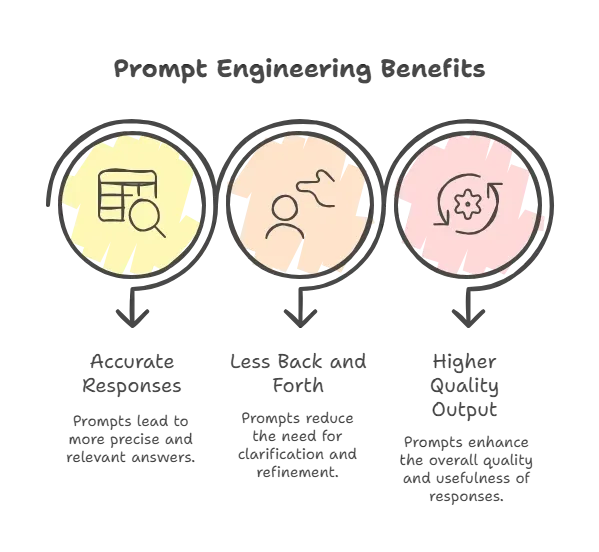
The short answer is smart prompting. When clear instructions guide AI, responses become more relevant, focused, and useful.
Studies show that well-structured prompts can improve output quality by more than 30% and significantly reduce irrelevant responses. That’s why prompt engineering best practices matter so much today.
With generative AI now supporting writing, coding, research, and analysis, the way prompts are written shapes everything that follows.
Let's walk through practical ideas, examples, and real-world insight to help prompts work better.
What is Prompt Engineering?
Prompt engineering is the method of writing instructions that guide AI models toward the right answer. Think of it as giving directions to a helpful assistant. The clearer the directions, the smoother the outcome.
Language models don’t “think” like people. They predict responses based on patterns from training data. That’s why vague requests often lead to mixed or shallow replies. Clear prompts help the AI system focus and respond with purpose.
This matters even more with large language models, which handle multiple tasks simultaneously. Writing summaries, answering questions, producing AI-generated content, and handling coding tasks all depend on how the prompt is framed.
Why Prompt Engineering Has Become So Popular?
So, why all the attention now?
The rise of generative AI systems pushed prompt writing into everyday workflows. Marketers, developers, analysts, students, and creators all use AI tools daily.
Core Prompt Engineering Best Practices That Work
Let’s walk through the ideas that consistently help AI perform better.
Keep Instructions Clear and Direct
Clear instructions remove guesswork. Short sentences work better than long ones. Avoid imprecise descriptions.
Instead of:
“Explain stuff about AI and coding.”
Try:
“Explain how prompt engineering helps generate code, using short paragraphs and examples.”
That single change more effectively guides model outputs.
Specify the Desired Output
Mention the desired format, length, tone, or structure. This helps AI understand expectations.
For example:
“Write five bullet points with a short explanation under each.”
This approach supports effective prompts and improves consistency.
Provide Context When Needed
Context matters. A short line about the audience or goal can change everything.
For instance:
“Explain climate change impacts for middle school students.”
That context shapes vocabulary, tone, and depth.
Prompting Techniques That Improve Accuracy
Next, let’s look at popular prompting techniques and when to use them.
Zero Shot Prompting
Zero-shot prompting asks the AI to complete a task without examples. It works well for simple questions or definitions.
Example:
“Summarize the benefits of prompt engineering.”
This method is fast and flexible. Zero-shot is common in everyday searches and explanations. Zero-shot prompting is often used with AI tools for quick insights.
Few-Shot Prompting
Few-shot prompting includes a few examples. This helps when structure or tone is at issue.
Example:
“Here are two examples of product descriptions. Write a third one in the same style.”
Using a few examples improves relevance and consistency.
Chain of Thought Prompting
The chain of thought guides the model through the reasoning steps. This is helpful for complex reasoning or calculations.
Example:
“Explain the answer step by step before giving the final answer.”
This approach often improves accurate responses and reduces logical errors. Chain-of-thought prompting is especially useful for math, logic, and analysis.
Tree of Thought Prompting
Tree-of-thought prompting explores multiple reasoning paths before selecting the best one. This is useful for brainstorming or strategy planning.
A Simple Comparison
Here’s a helpful snapshot of common prompting techniques:
| Technique | Best For | Result |
|---|---|---|
| Zero Shot | Quick answers | Fast response |
| Few Shot | Structured tasks | Consistent output |
| Chain of Thought | Logical problems | Clear reasoning |
| Tree of Thought | Idea exploration | Multiple options |
Writing Prompts for Technical and Creative Tasks
Now let’s talk about different task types.
Writing Code and Code Generation
When prompts involve writing code, clarity is everything. Mention the programming language, purpose, and constraints.
Example:
“Generate Python code that reads a CSV file and prints summary statistics.”
For code generation, asking for comments and explanations helps review and reuse. Including existing code can also guide modifications.
Code snippets improve understanding and reduce errors. That’s why many developers refine prompts through an iterative process.
Creative Writing and Content Tasks
Creative prompts benefit from tone guidance.
Example:
“Write a friendly blog introduction in a conversational tone with short sentences.”
This helps AI match the communication style.
Refining Prompts Through Iteration
Then comes refinement. Few prompts work perfectly on the first try. Adjust wording based on the AI’s responses.
Try changing:
- Sentence length
- Instruction order
- Output format
Refining prompts improves relevant responses and saves time long term.
How Prompt Engineering Handles Complex Tasks
For complex tasks, break instructions into steps. Ask for intermediate steps before the final answer.
Example:
“List the steps, then provide the final answer.”
This improves transparency and output quality. It also helps verify logic, especially in areas such as finance, science, and medical data summaries.
Community Insight
People working with AI daily often share useful lessons. A popular Reddit discussion highlighted this clearly:
“Clear goals, structured steps, and examples raised success rates dramatically. Most failed prompts were just unclear.”
This reflects a shared experience across many industries.
Rocket.new and Prompt-Driven Development
Rocket.new shows how a well-written prompt can turn an idea into a real, usable product. It takes plain-language descriptions and turns them into working applications.
With Rocket.new, users simply explain what they want to build. From there, the platform handles the interface, backend logic, authentication, and deployment. The overall flow highlights how clear prompts guide systems toward reliable results.
Key Features
- Single prompt app creation
- Design-to-code workflow
- Built-in backend services
- Deployment support
Rocket.new highlights how effective prompts support speed and clarity in software creation.
Common Mistakes to Avoid
A few habits often lead to weaker results:
- Using vague language
- Asking multiple tasks at once
- Forgetting to specify the format
- Relying on the same prompt
Even small tweaks can lead to more accurate responses.
Looking Forward With Prompt Engineering
As language models grow more capable, prompt writing will stay relevant. Better prompts help users guide AI’s behavior without complex settings or fine-tuning.
Prompt engineering supports learning, productivity, creativity, and automation across many fields. From climate change education to data extraction, it helps bridge the gap between intent and results.
Prompt engineering best practices in action
Clear prompts lead to better answers. By using structure, examples, and thoughtful wording, users guide AI toward reliable results. Simple refinements improve accuracy, relevance, and confidence. As generative AI continues to grow, prompt writing remains a skill that shapes every interaction.
Table of contents
- -What is Prompt Engineering?
- -Why Prompt Engineering Has Become So Popular?
- -Core Prompt Engineering Best Practices That Work
- -Keep Instructions Clear and Direct
- -Specify the Desired Output
- -Provide Context When Needed
- -Prompting Techniques That Improve Accuracy
- -Zero Shot Prompting
- -Few-Shot Prompting
- -Chain of Thought Prompting
- -Tree of Thought Prompting
- -A Simple Comparison
- -Writing Prompts for Technical and Creative Tasks
- -Writing Code and Code Generation
- -Creative Writing and Content Tasks
- -Refining Prompts Through Iteration
- -How Prompt Engineering Handles Complex Tasks
- -Community Insight
- -Rocket.new and Prompt-Driven Development
- -Key Features
- -Common Mistakes to Avoid
- -Looking Forward With Prompt Engineering
- -Prompt engineering best practices in action